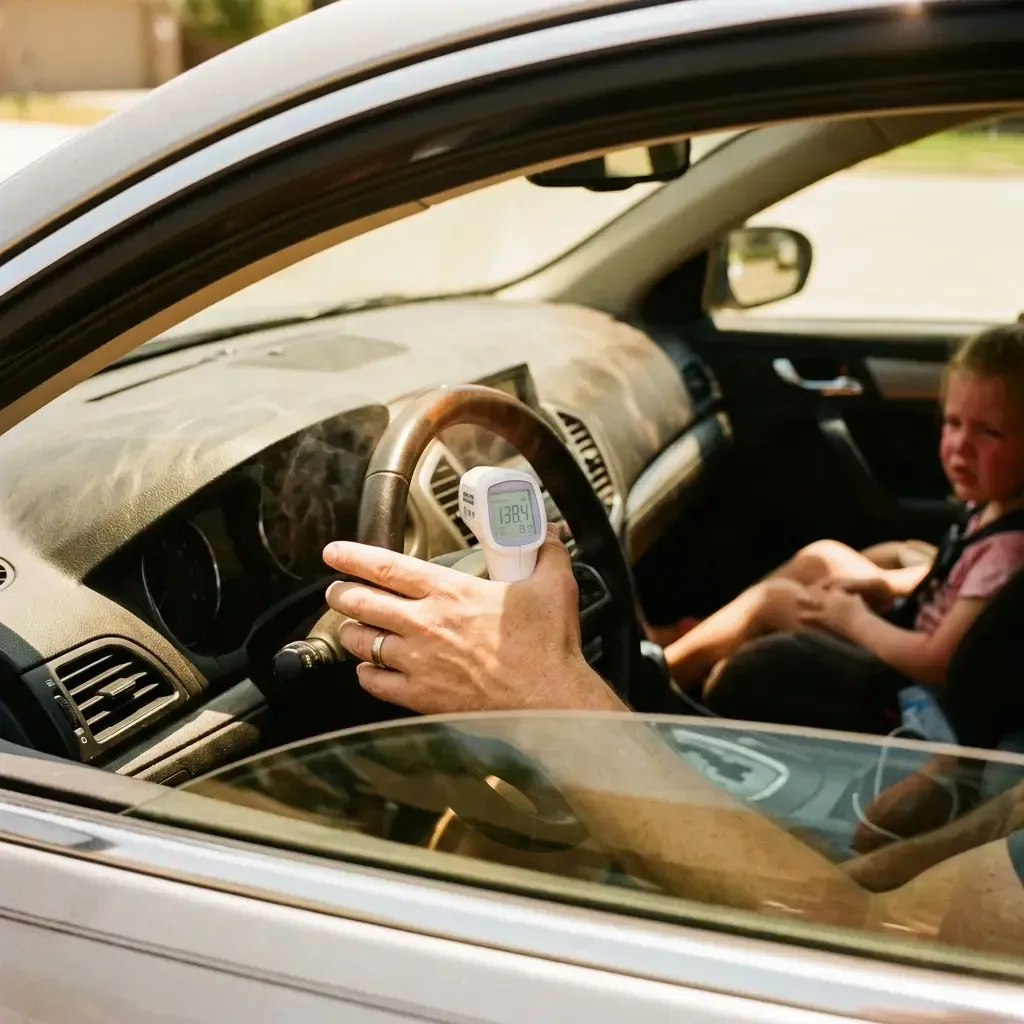
I've Watched Drivers Wait Until July to Tint Their Windows. Their Cars Hit 138 Degrees First.
I install window tint for a living. Every May, I get the same question: "Can I wait until summer to see if I really need this?"
By June, those same people are calling back. Their leather seats are too hot to touch. Their steering wheels burn their hands. Their air conditioning runs continuously and barely keeps up.
The science explains why waiting costs you.
Your Car Becomes an Oven Faster Than You Think
After one hour in direct sunlight, the average vehicle interior temperature rises43 degreesabove the outdoor temperature.
When it is 90 degrees outside, your cabin reaches 133 degrees.
When it is 95 degrees outside, your cabin reaches 138 degrees.
Eighty percent of that temperature increase happens within the first 30 minutes. Your dashboard hits 160 degrees. Your steering wheel reaches 107 degrees. Your seats climb to 105 degrees.
This happens whether you park in Utah, Arizona, or anywhere the sun shines directly on glass.
The damage starts immediately.UV radiation and extreme heat crack your dashboard, fade your upholstery, and degrade every interior surface. You cannot see it happening in real time, but the molecular breakdown is constant.
Half the Heat You Feel Is Invisible
Most people think tint just blocks sunlight.
That misses the actual problem.
Roughly half of solar energy arrives asinfrared radiation. You cannot see infrared waves, but you feel them as direct heat. Touch a metal surface after it sits in the sun. That is infrared energy transferring into the material.
Your windshield blocks 95–98% of UVB radiation. Your side and rear windows block only 55–70% of UVA. Neither stops infrared heat.
Standard window film blocks visible light and some UV radiation. It does not address the infrared spectrum where the majority of heat energy travels.
Advanced ceramic films block 95–99% of infrared radiation.Carbon films block 40–60%. The performance gap is measurable in cabin temperature, fuel consumption, and long-term interior condition.
The 13-Degree Difference Between Materials
I have run side-by-side thermal tests with identical vehicles parked under peak summer heat.
Ceramic tint kept cabin temperatures approximately13 degrees coolerthan carbon alternatives. Professionally installed ceramic film maintained vehicles 10–15 degrees cooler than untinted counterparts.
That difference translates into measurable outcomes:
Your air conditioning cools the cabin 40% fasterbecause it is not fighting against retained heat. Your engine works less. Your fuel efficiency improves. Your compressor lasts longer.
Your interior materials degrade slowerbecause they are not exposed to temperature extremes that accelerate molecular breakdown. Leather stays supple. Plastics resist cracking. Fabrics hold color.
Your comfort increases immediatelybecause surface temperatures drop to levels that do not burn skin on contact.
The material you choose determines whether you get these outcomes or just darker windows.
Why Timing Matters More Than You Realize
Window film requires a curing period after installation. The adhesive needs time to bond completely with the glass. During that period, you avoid rolling down windows and you expect some minor visual imperfections that resolve as moisture evaporates.
In moderate temperatures, curing takes 3–5 days.
In extreme heat, the process accelerates but introduces complications. High cabin temperatures can cause premature drying that affects adhesive distribution. Thermal expansion and contraction stress the film before the bond fully sets.
Installing before summer gives the film optimal curing conditions. You get maximum performance when you actually need it.
Installing during summer means you are already experiencing the temperature extremes, interior damage, and fuel inefficiency that tint prevents. You are paying for protection after the exposure has started.
The Question You Should Ask Instead
People ask me if they need window tint.
The better question: what does operating without it cost you?
Fuel costs increasewhen your air conditioning runs at maximum capacity to fight heat gain that tint would have blocked.
Interior replacement costs accumulatewhen dashboards crack, seats fade, and plastic components become brittle from UV exposure and temperature cycling.
Comfort costs compoundevery time you enter a vehicle that has been sitting in the sun and wait for the cabin to become tolerable.
Health costs add upfrom UV exposure through side windows during your daily commute, especially if you drive during peak sun hours.
Premium ceramic film blocks up to 99% of UV rays. It rejects infrared heat before it enters your cabin. It maintains performance for five years or more without measurable degradation.
Carbon film shows 10–15% performance reduction after three years of daily exposure.
The cost difference between materials is one-time. The performance difference is permanent.
What I Tell Every Client Who Calls in May
You can wait until July to see if you need window tint.
Your car will tell you the answer by reaching 138 degrees, cracking your dashboard, and running your air conditioning so hard that your fuel economy drops noticeably.
Or you can install ceramic film now, before the temperature extremes start, and operate all summer in a cabin that stays 10–15 degrees cooler without additional effort.
I have installed thousands of films. The clients who prepare before summer thank me in June. The clients who wait until August wish they had called in April.
The science does not change based on when you decide to pay attention to it. Heat rejection works the same whether you install in spring or summer. The difference is how many days of extreme temperatures, interior damage, and fuel waste you experience before the protection is in place.
If you are reading this before summer starts, you still have time to avoid the costs I described.
If you are reading this in July, you already know what I am talking about.
