The $400 Garage Scrape That Should Have Cost $3,000: What PPF Actually Protects (And What Destroys It)
Last month, a customer brought me his Tesla Model 3 with a scraped fender.
His wife had backed out of the garage, heard the scrape against the wall, stopped immediately. When they pulled the car away, the damage looked worse.
I looked at the fender and thought: this needs a repaint.
Then I removed the PPF.
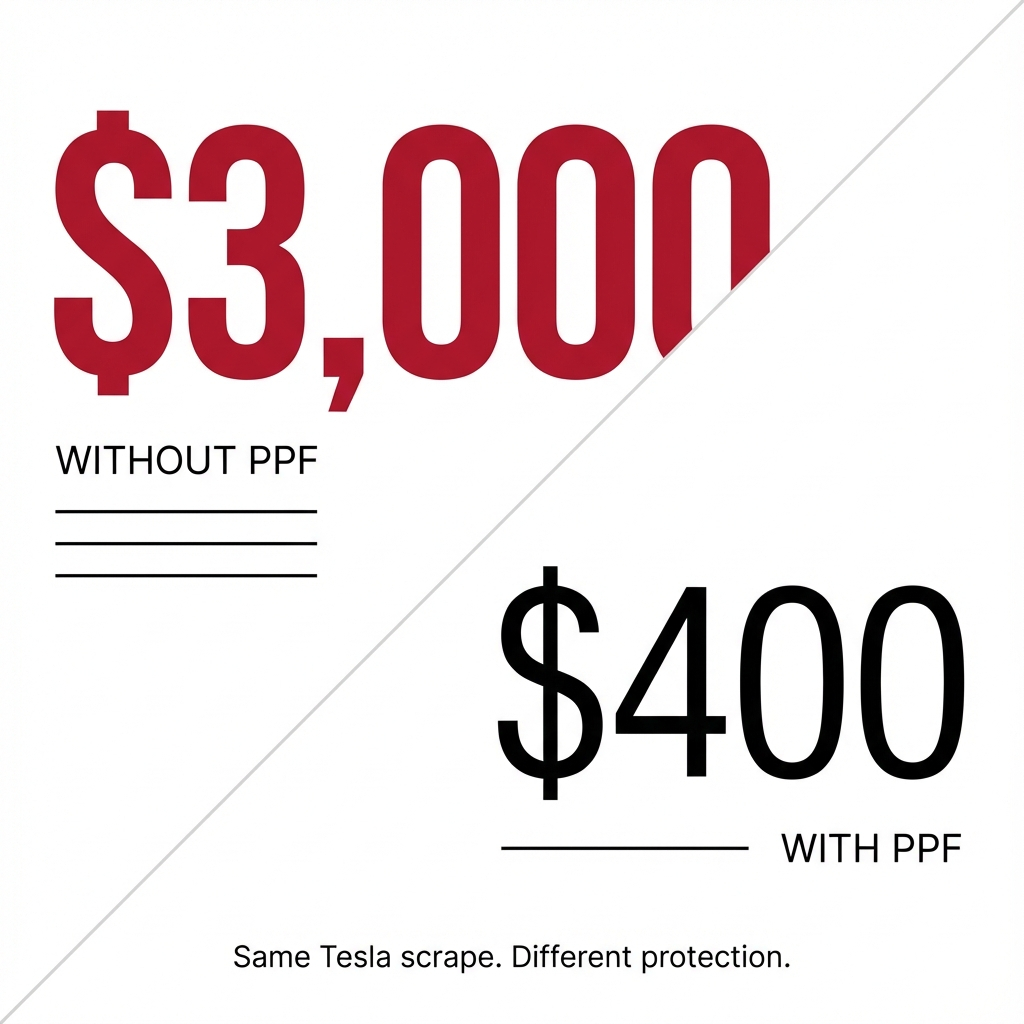
The paint underneath was flawless. A few small dents, nothing more. My neighbor handles paintless dent repair—he pushed them out from behind the panel in 20 minutes. I reapplied fresh PPF. Total time from drop-off to pickup: three hours.
Total cost: $400.
Without PPF, that same scrape would have required fender repaint on a Tesla. Body shops estimate $1,000 to $3,000 depending on color matching and prep work.
The customer was ecstatic. He'd expected to be without his car for weeks and pay over a thousand dollars.
The Protection Math Most Owners Miss
PPF works when you understand what it protects against and what destroys it.
High-quality PPF lasts 7 to 10 years when professionally installed and properly maintained. Premium films like LLumar Platinum come with manufacturer-backed warranties up to 10 years.
Lower-quality films manage 1 to 3 years before visible wear appears.
The difference isn't just material quality. It's maintenance discipline.
The Single Mistake That Voids Your Warranty
Automated car washes damage PPF in two ways:
Abrasive brushes scratch the film surface and lift edges where water enters. This causes adhesive failure. The panel requires replacement.
Touchless high-pressure systems seem safer because they avoid brushes. They're not. The water pressure forces liquid under film edges, causing delamination over time.
When customers bring cars back with bubbles under the film, I know exactly what happened.
Most of my customers use automated car washes anyway. They know they shouldn't. As long as it's not touchless, the damage risk sits below 10%. People are too busy to hand wash their cars.
They're comfortable with that risk.
The Products That Eat Through Film Adhesive
PPF handles more than most owners expect. You can wax it, buff it, maintain it like regular paint—if you know what you're doing.
Two chemicals damage PPF immediately:
Adhesive remover and lacquer thinner don't cause peeling. They cloud the film. The damage is permanent.
Petroleum-based degreasers, solvent cleaners, and acidic soaps break down the self-healing top coat. This causes discoloration and hazing you can't reverse.
Waxes containing naphtha or kerosene damage film structure. Waxes with dyes cause yellowing.
Use only pH-neutral car shampoo and products recommended by the film manufacturer.
The 48-Hour Window That Determines Decade-Long Protection
Wait at least 48 hours after installation before washing your vehicle. The film needs time for full adhesion.
Some manufacturers recommend 14 days. During this period, avoid water exposure, intense heat, extended drives, and car washes. Use the vehicle as little as possible.
Temperature control matters during this window:
Freezing conditions below 32°F and excessive heat above 100°F compromise the film's ability to bond with paint. Keep your vehicle in a controlled environment during the first two weeks if possible.
The Washing Method That Keeps Film Factory Fresh
Hand washing is the only method that maintains perfect PPF condition.
Use the two-bucket method with pH-neutral car shampoo. One bucket holds soapy water for cleaning. The other holds clear water for rinsing your mitt before returning for more suds. This prevents dirt particles from scratching the film.
Wash from top to bottom in straight lines, not circular motions.
If you use a pressure washer, keep the nozzle at least 24 inches away from the vehicle. Never spray directly at film edges. High pressure lifts edges and compromises installation integrity.
The Acidic Time Bombs That Cause Permanent Damage
Bird droppings, bug splatter, and tree sap contain acidic substances.
The longer they sit, the more likely they stain. Spot clean these areas immediately using gentle detail spray and a microfiber towel.
PPF protects paint from these contaminants, but the film itself becomes damaged when acidic substances remain on the surface for extended periods.
Address these contaminants the same day you notice them.
The UV Degradation Pattern That Accelerates Failure by 40%
Research shows PPF yellows up to 40% faster when subjected to intense sunlight versus shaded storage.
UV rays penetrate the film and break down its chemical structure through photodegradation. This causes color change and material weakening.
Low-quality films show visible yellowing within 6 months to 2 years. PVC, TPH, and aromatic TPU films yellow unavoidably.
Vehicles parked outdoors continuously experience up to 30% faster degradation compared to indoor storage.
Premium aliphatic TPU films resist UV degradation significantly longer, maintaining clarity throughout their warranty period.
The Repair Attempt That Invalidates Coverage
Attempting DIY repairs worsens damage and voids your warranty.
Professional services have specialized tools and experience necessary for effective repairs while preserving surrounding film integrity.
If removal is performed by anyone other than a certified installer, warranty coverage ends immediately.
Last month, a customer emailed me saying my pricing was too expensive. He went to a cheaper shop. A month later, he emailed again—the cheaper shop did horrible work. He wanted me to redo it because the dealership had originally recommended me.
I told him I'd happily fix it, but I'd have to charge more than my original quote because I now had to remove the inferior work first.
What 14 Years of Installations Taught Me About Protection
PPF prevents damage from low-impact objects: rock chips, scrapes, kids leaning on cars, scratches from bicycles in the garage.
When customers ask if PPF is worth the investment, I ask them about their previous car. How soon did it get rock chips? How many appeared over time?
Most people who are willing to spend money on PPF get it immediately. The longer you drive without it, the more damage accumulates.
A subset of customers get a chip or two, become upset, start googling how to prevent them. That's when they find PPF.
Touch-up paint starts at $125 and increases based on severity. Touch-ups never look as good as protected original paint. You can always see the little circle or thickness difference.
Full front-end PPF costs $1,495. Full front-end repaint costs $3,000 to $8,000.
The math is straightforward.
The Maintenance Reality After Installation
Regular cleaning and proper maintenance extend PPF lifespan significantly.
Ignoring upkeep leads to premature degradation and invalidates warranty coverage.
Dirt, grime, and road contaminants accumulate on film and accelerate wear. Environmental factors compound quickly when maintenance lapses.
Buyer failure to follow manufacturer-directed care instructions voids product warranty coverage.
The protection you paid for only works when you maintain the conditions that preserve it.
What Protection Actually Means
That Tesla owner expected weeks without his car and a four-figure repair bill.
Instead, he got his car back the same day with flawless paint for $400.
PPF works when you respect what protects it and avoid what destroys it.
Hand wash with pH-neutral soap. Address contaminants immediately. Skip automated car washes when possible. Use certified installers for repairs.
The film protects your paint. Your maintenance habits protect the film.
Both matter equally.
Ready to protect your vehicle's paint with professional-grade PPF installation? Contact Blue Zero Tint for a free consultation. We'll walk you through material options, maintenance requirements, and warranty coverage—so you know exactly what you're getting and how to keep it looking factory fresh for the next decade.
