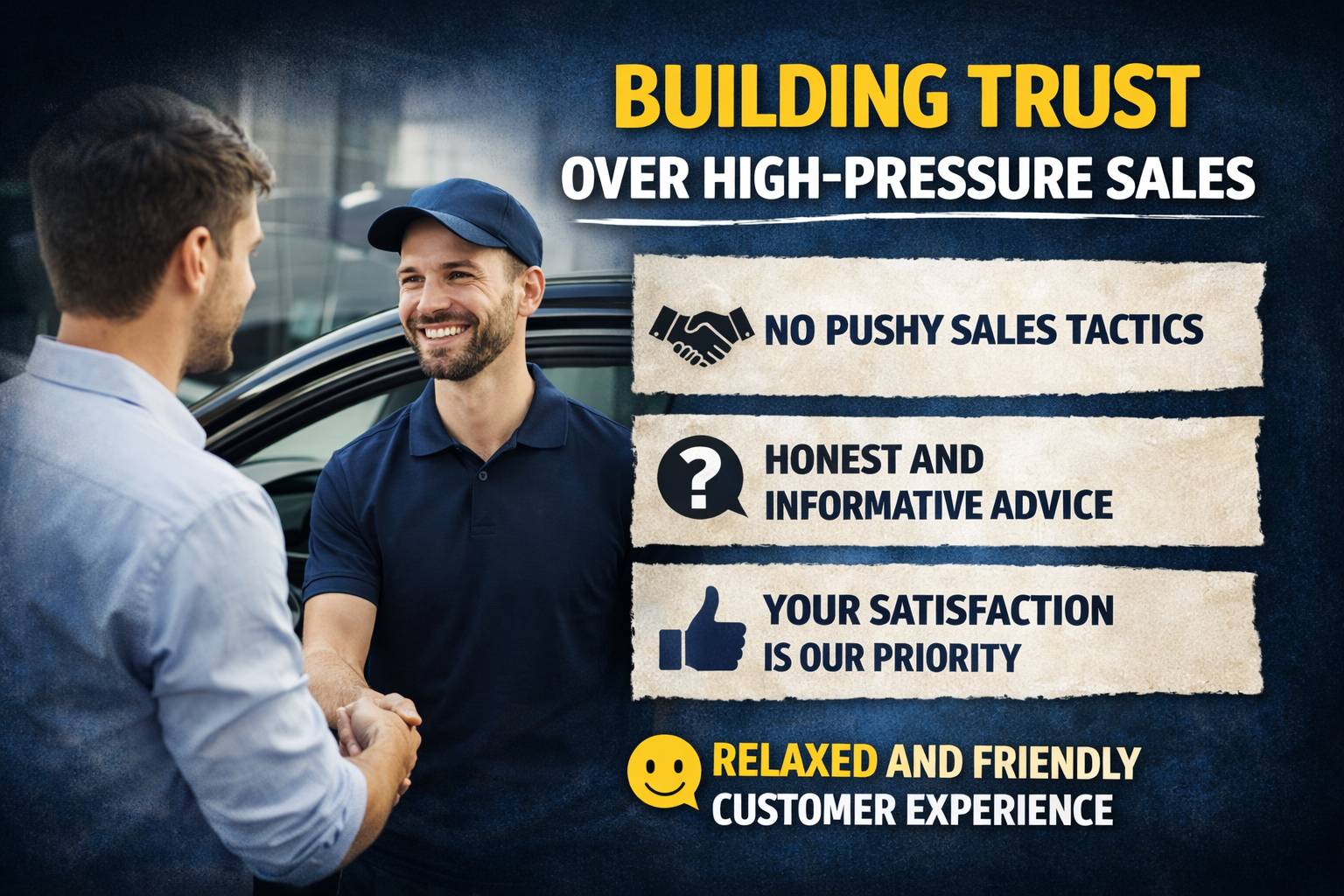
I Built Trust Faster By Answering Questions Nobody Asked
I used to think closing sales meant having the right pitch.
Then I realized something that changed how I run my business: customers don't trust your answers to their questions. They trust you when you answer questions they haven't asked yet.
This shift transformed how I approach every consultation, every website page, every customer interaction. I stopped selling and started teaching. The result? Higher conversion rates, fewer objections, and customers who arrive already convinced.
Here's what I learned about building a service business on education instead of persuasion.
The Trust Gap Nobody Talks About
There's a massive disconnect in service businesses that most owners miss entirely.
90% of business executives think customers highly trust their companies. Only 30% of customers actually do. That's a 60-percentage-point gap between what you believe and what your customers feel.
I see this gap every day in my industry. Competitors tell customers what they want to hear. They promise perfect results, skip the technical details, and avoid mentioning limitations. They think this builds confidence.
It does the opposite.
Customers arrive at my consultations having talked to three other companies. They've heard the same promises, seen the same before-and-after photos, received the same generic quotes. They're not looking for another sales pitch.
They're looking for someone who will tell them what actually happens.
What Transparency Actually Looks Like
Transparency isn't about being nice or ethical. It's a competitive advantage.
Data transparency scored 39% as the top way organizations build trust—almost twice as much as privacy compliance at 20%. Customers don't just want honesty. They want information before they have to ask for it.
I started documenting every question customers asked during consultations. The same concerns appeared repeatedly:
How long does installation take?
Will this affect my vehicle warranty?
What happens if there's a problem in six months?
Can you tint over existing damage?
How long before I can roll down my windows?
Most businesses answer these questions during the sales call. I answer them on my website, in my consultation materials, and in follow-up emails before customers ask.
This approach eliminates the friction that kills conversions.
Setting Expectations Eliminates Objections
I tell customers about cure times before they book. I explain that bubbles and haze are normal for 3-7 days. I walk them through what happens if their window has existing scratches or chips.
This seems counterintuitive. Why highlight potential problems before someone commits?
Because unmet expectations destroy trust faster than any installation mistake.
When I explain the curing process upfront, customers don't panic when they see temporary imperfections. When I document existing vehicle damage during consultation, they don't blame me for issues that were already there. When I specify exact timeframes for warranty coverage, they know exactly what protection they have.
The result? I've reduced post-installation complaints by more than 80% simply by managing expectations from the first conversation.
The Information Architecture That Converts
Education-based selling requires a different content structure than traditional marketing.
I organize service information around customer decision stages, not product features. Here's the framework I use:
Stage 1: Problem Recognition Content
Not all customers arrive knowing they need window tinting. They arrive with a problem: their car interior is fading, their office is too hot, they're concerned about UV exposure.
I create content that connects these problems to solutions without mentioning my services. Articles about UV damage to vehicle interiors, guides on reducing cooling costs in commercial buildings, explanations of glare reduction for home offices.
This positions me as an information source before I'm positioned as a vendor.
Stage 2: Solution Education Content
Once customers understand their problem, they need to understand solution options. I explain different film types, performance characteristics, and application scenarios.
I don't hide the fact that multiple solutions exist. I explain ceramic versus dyed films, residential versus commercial specifications, automotive regulations in Utah.
Customers don't trust vendors who pretend alternatives don't exist. They trust vendors who help them understand tradeoffs.
Stage 3: Implementation Reality Content
This is where most service businesses fail. They sell the outcome without explaining the process.
I document exactly what happens during installation. How long each vehicle type takes. What preparation is required. What the workspace looks like. What customers should expect during curing.
I include the limitations. I explain that existing damage won't be fixed by tinting. I specify that certain window defects make installation impossible. I detail what warranty coverage includes and excludes.
One company increased conversion rates by 250% simply by identifying recurring customer questions and answering them proactively through help pages, live chat, and a trust section that addressed objections before they were raised.
That's the power of implementation transparency.
Why This Approach Compounds Over Time
Traditional marketing delivers linear returns. You spend money on ads, you get leads, you convert a percentage, you repeat.
Education-based positioning compounds.
Every article I write answers questions for hundreds of future customers. Every detailed FAQ entry removes friction from dozens of consultations. Every installation process video builds confidence before the first conversation.
The data supports this. Service companies that share educational content experience 3x more conversions compared to those using traditional sales approaches. Blogs tailored to customer pain points generate 70% more engagement.
But the real advantage isn't conversion rate. It's selection bias.
Customers who arrive after reading my educational content are pre-qualified. They understand the process, they've set realistic expectations, they're comparing me to competitors on expertise rather than price.
This changes the entire sales dynamic.
The Questions You Should Be Answering
If you run a service business, start documenting every customer question you receive. Not just during sales calls—include support questions, post-service inquiries, and consultation concerns.
Then ask yourself: Where could I have answered this before the customer had to ask?
Here are the question categories I focus on:
Process questions: How long does this take? What preparation is required? What happens during the service?
Limitation questions: What can't you do? What conditions make service impossible? What won't this solve?
Outcome questions: What will this look like when finished? How long will results last? What maintenance is required?
Risk questions: What could go wrong? What happens if there's a problem? What does warranty coverage include?
Comparison questions: How do different options compare? What's the difference between premium and standard? When should I choose one over another?
Most service businesses answer these questions reactively during sales conversations. I answer them proactively across every customer touchpoint.
The result? Consultations become confirmation conversations rather than sales pitches.
What Changes When You Lead With Education
Shifting from persuasion to education changes how you think about every aspect of your business.
Your website stops being a brochure and becomes a decision-support tool. Your consultation stops being a pitch and becomes a technical assessment. Your follow-up stops being sales pressure and becomes additional information delivery.
You attract different customers. People who value expertise over price. People who want to understand what they're buying. People who become long-term relationships rather than one-time transactions.
You build different competitive advantages. Your information becomes your moat. Your transparency becomes your differentiation. Your educational content becomes your sales team.
And you create a different kind of business momentum.
61% of consumers have recommended a company they trust to friends or family, and 46% purchased more from companies they trust. Trust compounds faster than any marketing campaign.
The Implementation Framework
Here's how I structure education-based positioning in practice:
Document every customer question for 30 days. Create a spreadsheet. Track what people ask during consultations, what they email about, what they call to clarify. Look for patterns.
Create answer content for the top 10 recurring questions. Write detailed explanations. Include specific timeframes, exact processes, clear limitations. Make these answers accessible before customers have to ask.
Build a consultation preparation guide. Send this to every prospect before meeting. Include what to expect during consultation, what information you'll need, what decisions they should be prepared to make. Remove uncertainty from the process.
Develop process documentation for each service. Show what actually happens during installation or delivery. Include photos, timeframes, preparation requirements, post-service expectations. Make the invisible visible.
Create a limitations and exclusions page. List what you can't do, what conditions prevent service, what problems you don't solve. This seems risky but builds massive credibility.
Document your warranty and guarantee terms in plain language. Specify exactly what's covered, for how long, under what conditions. Include what's not covered. Remove ambiguity.
This framework transforms how customers perceive your business. You move from vendor to advisor, from salesperson to expert, from transaction to relationship.
What I've Learned About Trust
Trust isn't built through promises. It's built through information.
Customers don't need you to convince them. They need you to educate them. They don't need perfect answers. They need honest answers.
The businesses that win in service industries aren't the ones with the best marketing. They're the ones that remove the most friction from customer decisions.
And the fastest way to remove friction is to answer questions before they're asked.
I've built my business on this principle. Every consultation, every customer interaction, every piece of content focuses on one goal: making it easier for customers to make informed decisions.
The result isn't just higher conversion rates. It's better customers, stronger relationships, and a business that compounds trust over time instead of chasing transactions.
That's what happens when you stop selling and start teaching.
